The Usability Gap is Closing
Level 2 - Value Investor

Welcome Avatar!
We would define the public’s sentiment today as financial exhaustion. Markets have been weak, the world is at war and climbing the ladder in a traditional career feels hopeless to most. Those hoping for a quick rebound in crypto markets have been let down and they have wrongfully checked out - which means more opportunity for us. Your dumbest friends aren’t asking you how to buy Bitcoin anymore (the smart ones should be).
If you’re feeling the urge to capitulate and walk away stop and take a deep breath. You’ve already made it past the worst. Join us on today’s post with fresh eyes as we look back into history for lessons on tech adoption and why this seemingly quieter period is setting crypto up for even more success over the coming decades.
The Nerd Phase
The early internet was weird, slow, hard to use, and mostly interesting to technical people. TCP/IP existed. Browsers like Mosaic existed. You could see the development of something important relatively early on. But normal people were not looking at a big beige box on their desk and saying this thing will reorganize every aspect of commerce, media, advertising, communications, software, and daily life. They were mostly saying how annoying this thing is to use.
If you pick the start of the internet to the ARPANET’s first message (Oct 29, 1969), the modern internet began as a technical research network not a consumer product. By the time many people first encountered the web in the 1990s the underlying networking work was decades old.
Internet usage was at ~399 million users in 2000, scaling to ~1.5 billion by 2008 and ~2.9 billion by 2014. More recently, the International Telecommunication Union 6.0 billion users in 2025.
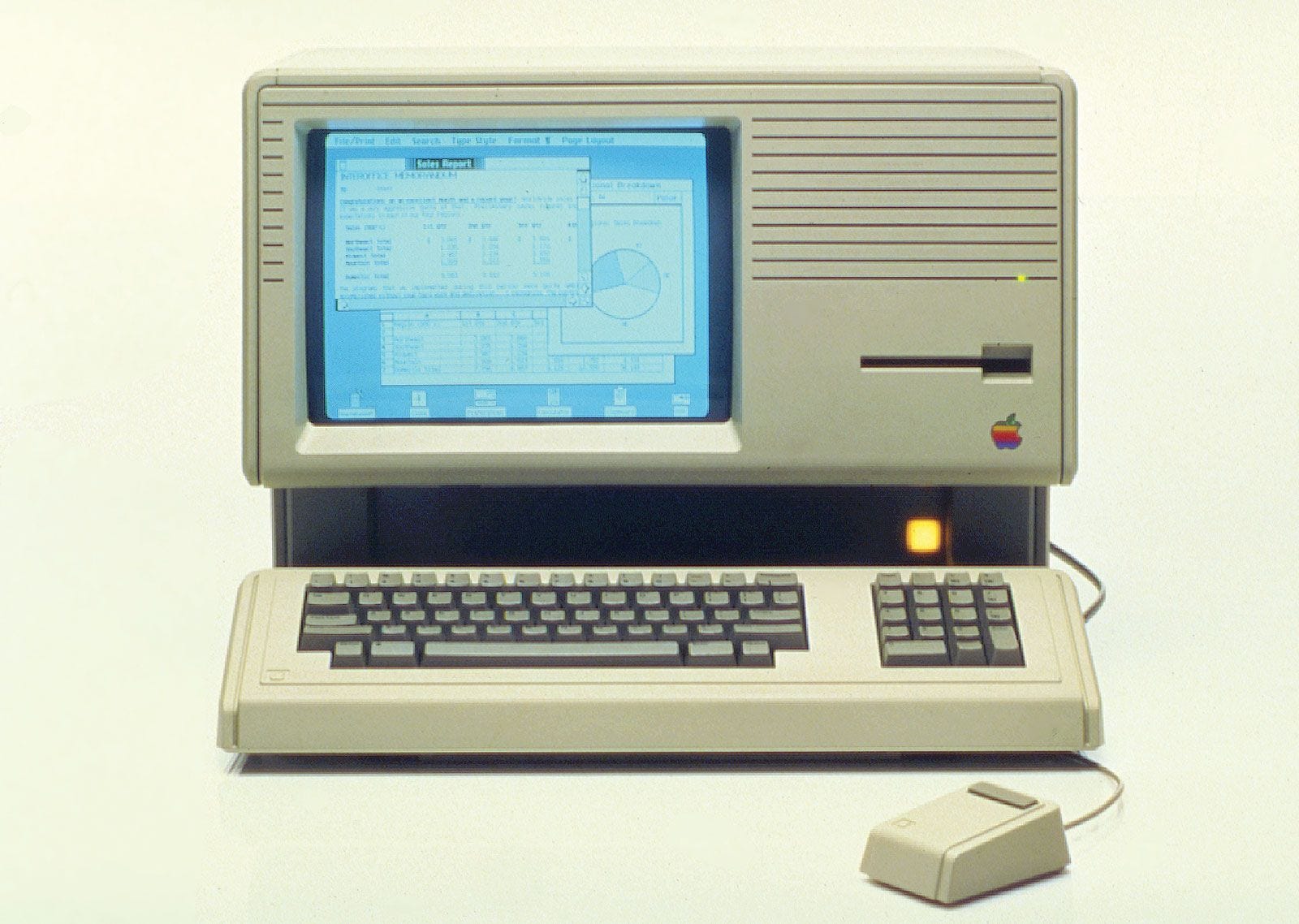
Crypto experienced a similar pattern of early experimentation with the release of Bitcoin in ‘09 to the launch of Ethereum in 2015. It was clunky and arguably terrifying to use due to its associating with the dark web and largely populated by ‘shadowy super coders’ who cared about the tech.
Autist Note: This is why we always suggest dropping everything to figure out whatever the “weirdos and nerds” are most excited about. You can’t be early to new ideas when you’re viewing things from a mainstream perspective. Yes you’ll be wrong some times, but you only need to be right once or twice in your entire life when it comes to investing in early technology. If it’s “cool” and “prestigious” you’re too late.
Up Only
Every transformational technology in history has experienced a period of time where markets and the population collectively decide the rules of gravity and economics no longer apply. People can be directionally right about the tech and hilariously wrong about the timeline. In the late 90s this was “dot com.” In 2021 it was crypto. During these periods, institutions have thrown billions at pitch decks solely because they use the right buzzwords. Retail investors tend to pile in later on the hype.

In 1999, adding “.com” to your company name instantly doubled your valuation, regardless of whether you had a working product or a path to revenue. In 2021, throwing “Web3” “DeFi” or “Metaverse” into your marketing had the exact same effect. You could get funded for millions of dollars with no credibility or track record to speak of.
In 2022 the media said Sam Bankman-Fried was the “Next Warren Buffett” just like they made Jeff Bezos Time’s “Person of the Year” right before the Nasdaq collapsed.
Pets.com sold dog food online for a loss and was valued at over $300 million before going bankrupt within 9 months of its IPO. In crypto we had algorithmic stablecoins printing 20% yields out of thin air and jpegs selling for the price of a house.
In 2000, the Nasdaq crashed 78% and wiped out trillions in paper wealth, not unlike 2022’s crypto deleveraging that caused BTC and ETH to fall over 70% from their highs.
You’re surely familiar with this story by now. But what is often overlooked in this comparison is the importance of the years that followed.
Mourning the Death of the Internet
After the dot-com bust, some concluded that the internet itself was completely overhyped as a category. That should sound familiar. Every major crypto drawdown produced an obituary. Dead asset class, no real use case, bad reputation related to crime, etc.

These periods come with two primary benefits:
It discredits weak business models and forces their liquidation (many of the largest crypto companies in 2021 are no longer around for this exact reason)
It creates an environment where only improvements that survive in severe difficulty can compound (DeFi protocols that survived are far more stable today)
Quiet Progress
Between 2001 to 2005 users began to switch from dial up internet to broadband. By the end of 2005 the internet had crossed one billion users. The surviving companies were becoming operationally sophisticated and profitable.
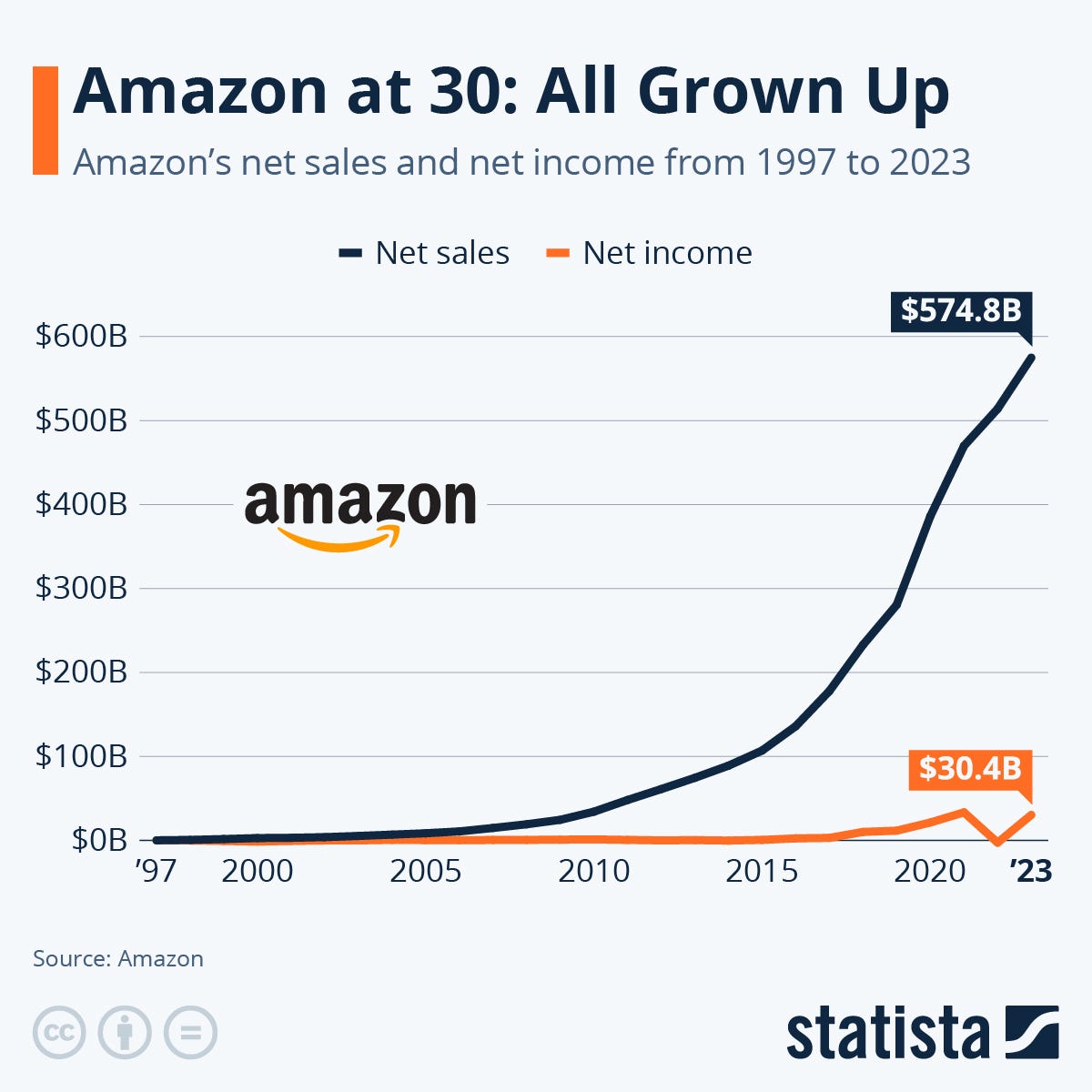
The internet took 36 years (1969–2005) to reach 1 billion users. Crypto has reached an estimated 600 million owners in just 16 years (*active* crypto users are estimated at closer to 40 - 70 million).
The right combo of infrastructure improvements, user growth and companies that delivered what customers wanted at scale accelerated the distribution of the internet as a technology.
We consider the 2024 bull run somewhere between a hype cycle and genuine development. January 2024 brought SEC approval for spot bitcoin ETPs, March 2025 brought the Strategic Bitcoin Reserve executive order, and July 2025 brought the GENIUS Act for payment stablecoins. However, 2024 was also dominated by memecoin mania which was entirely speculative.
A lot of the progress since the 2022 washout has been easy to miss simply because it is less entertaining. Blockspace has gotten cheaper through Ethereum rollups and alt L1s. Stablecoin market cap is over $300 billion. Select crypto companies have become some of the most profitable in the world, proving out crypto native business models and scalability. Legacy financial institutions are tokenizing assets on public ledgers. Global payment processors are running their own nodes. This can be analogized to engineers laying thousands of miles of fiber optic cables under the ocean for faster internet.
The post-2005 internet era not only captured more users, it made the internet accessible to the average person. Payments felt more secure and simple. Search improved. Eventually there was a breakthrough (the iPhone) which turned the experience into something highly sought after - the internet went from a nice to have to a must have.
Looking Ahead
What does the post-2005 phase look like for crypto? The market has already experienced a drawdown magnitude comparable to historical tech washouts. Adoption as measured by ownership is large but habitual usage is small, suggesting there is still a major gap in usability and integration.
Furthermore, the post-2005 era for internet companies was not a broad win for every surviving website. Just like the internet, it does not mean that every chain or app token suddenly becomes the next Amazon. The “rising tide lifts all boats” era is largely behind us. You have to be in the right boat.
A maturing market does not reward every chain, every token, or every narrative. We’ve been saying this on this very newsletter since 2024 and this has proven out over this past cycle.
The main questions to ask are a) who owns the user and b) who owns the liquidity. There have been many attempts over the year to use crypto towards solutions for social media and the like, but time again crypto has proven to be most disruptive and useful for financial use cases. The “Googles” and “Amazons” in crypto are those that concentrate liquidity (exchanges, bridges, L1 networks, etc) to provide the best quality transactions for users.
For those of you that have been in crypto for multiple cycles, it’s important to make the shift and understand adoption does not happen when technology is most ‘ideologically pure.’ Products have to be good enough that normal people can use them without caring how it works under the hood.
People adopted the internet because eventually the things you could use it for became too useful to ignore. If you weren’t using the internet you were wasting lots of time and money!
Until next time..
P.S. this is a free post, sign up to become a paid sub for more posts every week.
Paid subscribers also get access to:
All of our past posts
Weekly Deep Dive Report
A comprehensive bi-weekly DeFi Roundup
Bi-weekly Q&A sessions with our team

Disclaimer: None of this is to be deemed legal or financial advice of any kind. These are opinions from an anonymous group of cartoon animals with Wall Street and Software backgrounds.
We now have a full course on crypto that will get you up to speed (Click Here)
We offer the Prediction Markets module on a standalone basis (Click Here)
Security: Our official views on how to store Crypto correctly (Click Here)